
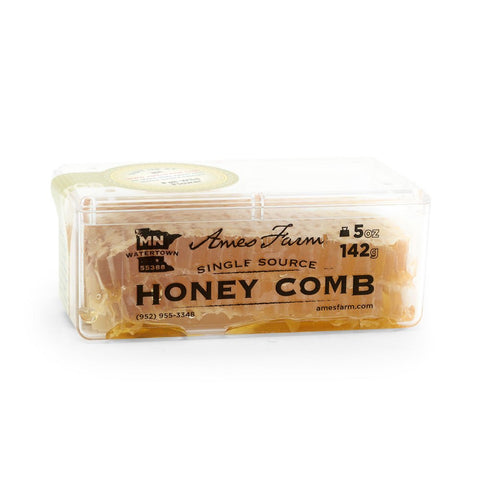
Fall Wildflower Raw Comb Honey
Fall Wildflower Comb Honey is a limited, late-season raw honey harvested when the last flowers of the year are blooming. This 2026 crop is fully edible in the comb, with a naturally varied light amber to amber color and a flavor that leans savory with occasional fruity and woody notes from fall asters, goldenrod, jewelweed, and wetland blossoms. No heat or extra processing — just honey and comb, harvested straight from the frame.
A Harvest Shaped by the Season
Fall Asters, Goldenrod, Jewelweed, and various wetland flowers are among the possible nectar sources for this late-season honey. The particular mix depends on what is blooming and available to the bees during the fall harvest and can vary from one fall to the next.
Honey and Comb Together
The honey is preserved in the beeswax cells built by the bees, and the comb is fully edible. Enjoying them together gives you the honey in the same natural structure in which it was stored.
A Limited Late-Season Harvest
This comb comes from one of the last honey harvests of the year. Its limited seasonal availability makes it a special opportunity to taste what the bees gathered as the flowering season winds down.
How Bees Build the Honeycomb
Inside the hive, worker bees produce beeswax and form it into rows of individual cells. This carefully constructed structure gives the colony a place to store honey and creates the familiar pattern we recognize as honeycomb.
After the cells are ready, the bees fill them with honey gathered from the surrounding flowers. When the honey is ready to be stored, the bees seal the filled cells with thin beeswax caps.
We harvest the finished slabs directly from the wood frames and cut them into smaller pieces for sale. Nothing needs to be separated from the comb or heated to prepare it for you—the honey and beeswax remain together just as they were harvested.
Prefer Fall Wildflower Honey Without the Comb?
If you prefer your honey without the beeswax comb, the same Fall Wild Flower Honey is also available in 2 oz, 9 oz, and 18 oz sizes.
Shop Ames Farm Fall Wild Flower HoneyWays to Enjoy Fall Wildflower Comb Honey
Fall Wildflower Comb is especially suited to foods that can highlight its deeper late-season character. Try it first on its own, then experiment with savory pairings, breakfast foods, fruit, or dessert to see where you enjoy it most.
Taste the Fall Harvest
Try it on its own first. A small piece gives you a chance to notice the honey's sweetness, texture, and individual character before introducing other flavors.
Build a Cheese Board
Pair it with cheese. Add small pieces to a cheese board alongside aged cheddar, creamy cheeses, or other favorites. The honey provides a sweet contrast to the savory and tangy flavors of the cheese.
Serve with Breakfast
Bring it to breakfast. Place a piece alongside toast, biscuits, pancakes, waffles, or yogurt and let the honeycomb become part of the meal rather than simply using honey as a topping.
Pair with Fruit and Dessert
Finish a dessert with something unexpected. Serve a small piece beside fresh fruit, a pastry, ice cream, or even a slice of pie on Thanksgiving for a combination of creamy, crisp, or buttery textures with the honeycomb.
Share at Fall Gatherings
Serve it when you're entertaining. A few pieces of comb can go directly onto a shared board or platter, where guests can choose their own piece and pair it with the other foods being served.
How to Enjoy Fall Wildflower Comb Honey
Open the Comb
Take out only what you plan to serve. Keep the remaining pieces protected in their packaging and portion the comb as needed.
Taste the Harvest
Taste it before pairing it. Start with a small piece so you can get a sense of the honey's flavor and the texture of the comb on its own.
Try Different Pairings
Experiment with cheese, breakfast foods, fruit, or dessert to see which foods bring out the savory, fruity, or woody notes you enjoy most.
Serve and Share
For a gathering, arrange pieces of comb on a serving board or platter. The visible honeycomb adds a beautiful to the presentation.
The Flowers Behind Fall Wildflower Honey
Fall is a period of transition for both the landscape and the bees. As different plants finish blooming, new sources of nectar become available while others disappear. The bees work with what is flowering at the time, making a late-season wildflower harvest a reflection of that particular point in the year.
Fall Asters, Goldenrod, Jewelweed, and various wetland flowers are among the possible nectar sources for this hard-to-find seasonal honey. These late-blooming flowers help provide the bees with nectar as summer gives way to autumn.
That changing floral mix also helps explain why wildflower honey cannot be defined by one single flavor. Weather, flowering times, and the plants blooming around the apiary all influence what nectar the bees have available to gather.
In this 2026 harvest, the flavor can lean mostly savory, with occasional fruity and woody notes. It is a profile that belongs to the season rather than to one named flower, which is part of the appeal of a true fall wildflower honey.
Frequently Asked Questions About Fall Wildflower Comb Honey
Have questions about our 2026 Fall Wildflower Comb Honey? Here are answers about this limited seasonal harvest, its possible floral sources, edible beeswax comb, flavor, and preparation.
What is Fall Wildflower Comb Honey?
Fall Wildflower Comb Honey is honey that has been left in the beeswax comb rather than separated from it. Our 2026 crop comes from the latter part of the honey season, when the bees are gathering from the flowers still blooming in the fall landscape. The result is a seasonal comb honey with a character that can differ from year to year.
What flowers contribute to Fall Wildflower Honey?
Fall Asters, Goldenrod, Jewelweed, and various wetland flowers are among the possible sources. The bees do not gather from a predetermined recipe; they collect nectar from the plants that are flowering and accessible to them, so the combination naturally changes with the season.
What color is Fall Wildflower Comb Honey?
The comb ranges from light amber to amber. Color can naturally vary within seasonal honey depending on the nectar sources contributing to the harvest.
What does Fall Wildflower Comb Honey taste like?
Fall Wildflower Comb has a notably variable flavor because it comes from a changing collection of fall flowers. Our fall wildflower honey can be mostly savory, with occasional fruity and woody notes. Rather than tasting like one specific flower, its character reflects the broader mix of nectar gathered during the late-season harvest.
Is the beeswax comb edible?
Yes, the beeswax comb is fully edible. You can chew and enjoy the honey and comb together, or separate the beeswax after the honey has been enjoyed if that is your preference. Leaving the honey in the comb is what distinguishes this product from honey that has been extracted and packaged in a jar.
How do honeybees make the comb?
Worker bees produce beeswax and shape it into individual cells that form the honeycomb. Once the bees have filled those cells with honey, they seal them with a thin layer of additional beeswax. We harvest the finished comb from the frames rather than removing the honey from those cells.
Is Fall Wildflower Comb Honey heated or processed?
No heat or additional processing is used. We cut slabs of fresh honeycomb directly from the wood frames and then cut them into smaller pieces for sale. The honey remains in the beeswax comb throughout the process.
Why does Fall Wildflower Honey vary from year to year?
Fall Wildflower Honey naturally changes because the flowers available to the bees change. Blooming times, weather, and local growing conditions can all affect which plants are producing nectar when the bees are gathering. That means the floral balance, and therefore the flavor, can differ between harvests.
Why is Fall Wildflower Comb Honey in limited supply?
Fall Wildflower Comb Honey has a limited seasonal harvest. Fall Wildflower Comb comes from one of the last honey harvests of the year, and the amount available depends on what the bees are able to gather and what can be harvested from the hives at the end of the season.
If you enjoy honeycomb by itself then this is a nice one to try, I have a spoonful every morning, not only the texture of comb is delicate and light, the honey comb also is fragrant and flavorful , they are a treat for me !
This one is great get it before it's gone
This was absolutely the best honey I have ever had. Will definitely buy again.
Delicious!
Great flavor.
Small amount for the price.